SagaciousThink Scale with Structure
Start here
SCALE™ Readiness Signal

Free · 10 minutes · No email required

The system
Core instruments
The thinking
Organizations
Practitioners

For coaches and advisors who need an objective way to show a client where they stand.

The concept
Organizational Diligence™

The missing layer of M&A due diligence

Your position
For advisors

Four of these are a position in a transaction. The fifth is a role — your client is standing in one of the others.

Scale with Structure

Insights

Periodic musings

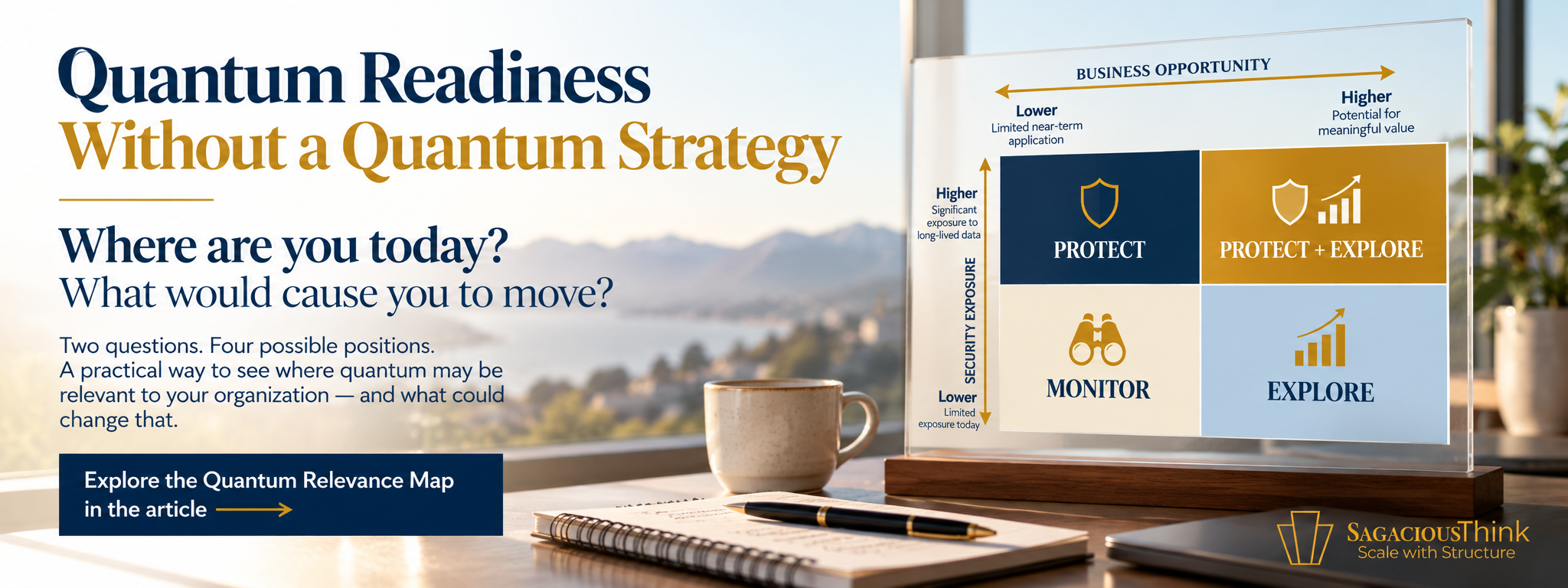
Quantum Readiness Without a Quantum Strategy

Quantum readiness does not require a quantum strategy. For most middle-market companies, the more useful question is whether the organization can recognize when quantum becomes relevant to its security, customers, vendors, or business model—and respond before urgency takes over. The Quantum Relevance Map offers a practical starting point: understand where you are today, identify what could cause that position to change, and build the organizational capacity to notice when it does.

Read More


The Acquirer Belongs in Due Diligence Too

Acquirers scrutinize a target’s earnings, customers, leadership, technology, and liabilities. While often treating their own organization, the one intended to absorb the acquisition, as a fixed variable. Before asking what the target will require after close, leadership and the board should examine whether the buyer has the capacity, decision structure, leadership depth, and resilience to deliver the deal thesis.

Read More
The Acquisition Muscle Most Companies Have Not Yet Built

The target can be attractive, the price defensible, and the deal thesis sound—and the acquisition can still outrun the buyer’s organizational capacity. Leadership bandwidth, decision rights, governance, and the ability to protect the existing business all influence whether value is realized after close. This article examines why experienced acquirers develop an advantage, what first-time and infrequent buyers may not yet have built, and how organizational evidence can reveal what a transaction will demand before the integration pressure arrives.

Read More
Why Do CEOs Call Other CEOs?

When chief executives need to make sense of what lies ahead, many turn to other CEOs more readily than to their own directors or chair. That does not necessarily indicate a failing board. It raises a more revealing question: if relevant experience is already present around the board table, why does the CEO seek it elsewhere? The answer may lie less in what directors know than in trust, timing and whether their knowledge can enter the conversation before a strategic direction has hardened.

Read More