A CEO can champion a promising new business, but sponsorship alone does not make venture building an organizational capability. McKinsey’s latest research identifies the leadership, capital, culture, and governance new ventures require. This article takes the question one step further: can those conditions survive competing priorities, financial pressure, or a change in leadership? For executives and CVC leaders, the answer may determine whether a venture scales or remains dependent on whoever is protecting it.
Read MoreA frozen lake can appear solid right up until the moment it breaks.

Organizations are often no different. Most governance failures don't begin with a crisis. They begin with subtle shifts that remain hidden while performance is still strong.
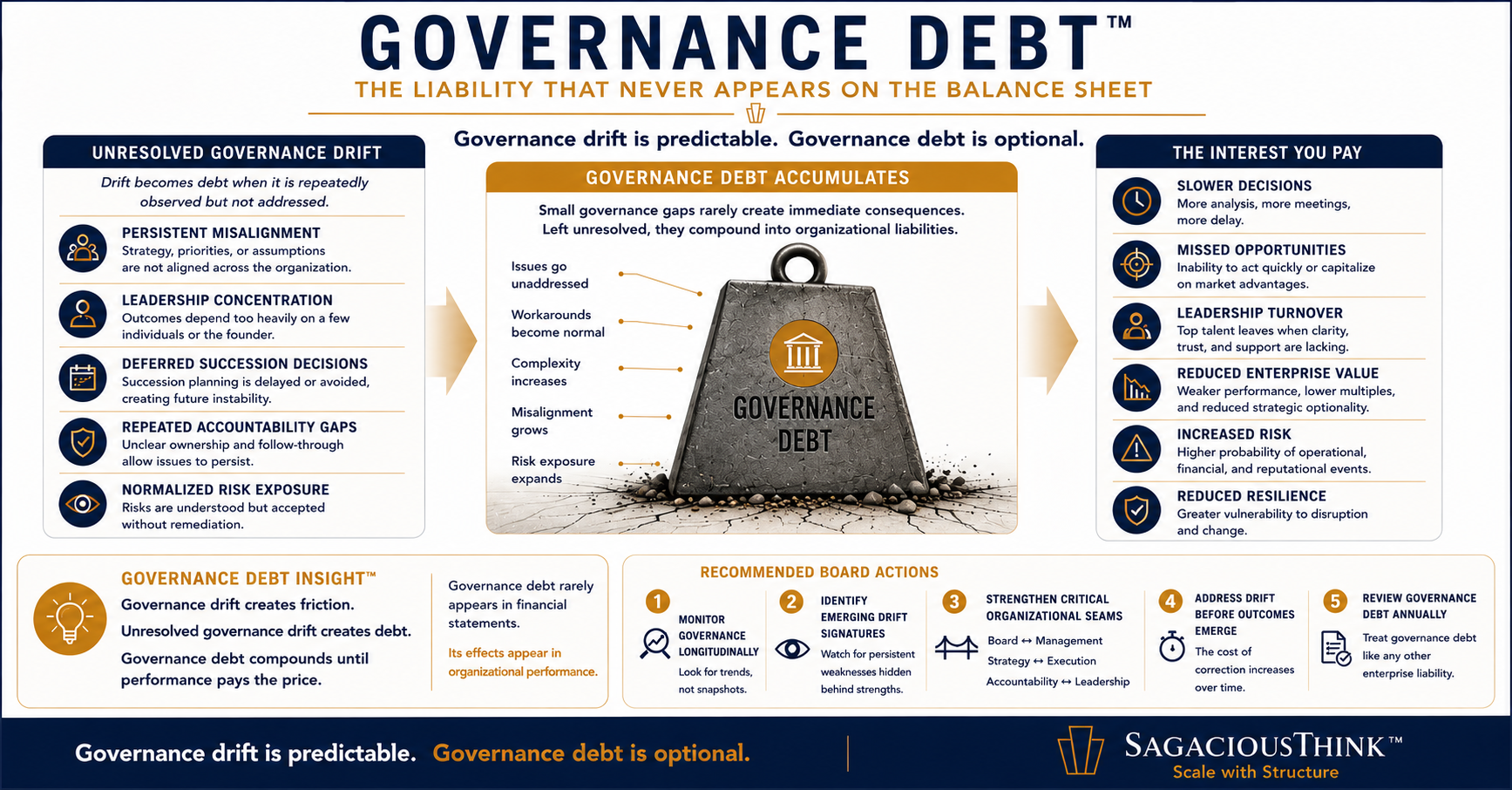
The strongest boards don't wait for red flags. They look for early signs of governance drift before drift becomes governance debt and debt becomes consequence.
Because organizations rarely break all at once. They drift there first.
Most companies do not realize they have a governance problem until growth starts creating friction.
Decisions slow down.
Coordination weakens.
Risks surface too late.
Leadership becomes the bottleneck.
At a certain point, every organization reaches a complexity threshold where informal leadership systems stop scaling effectively.
The companies that navigate this successfully understand something important:
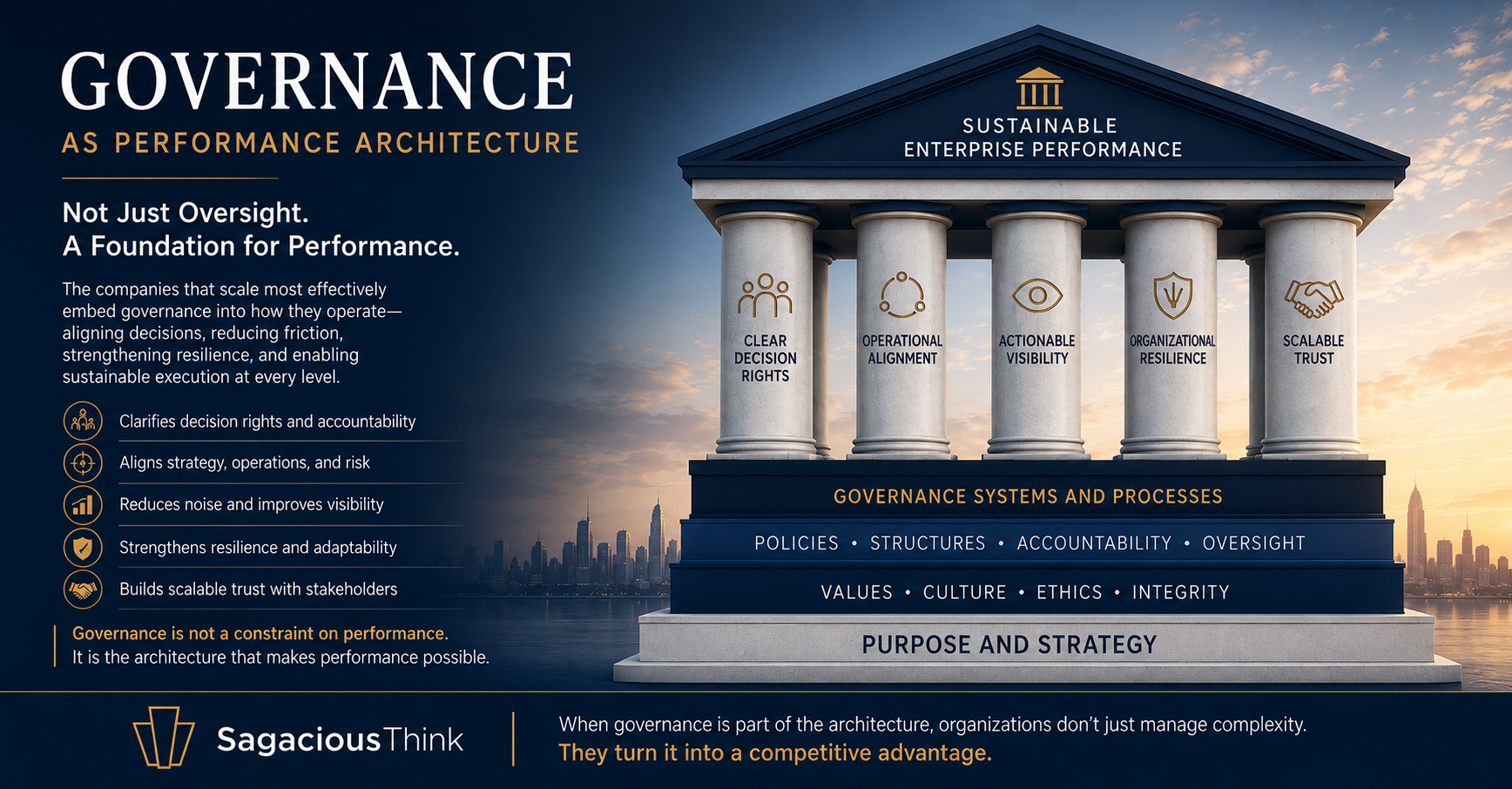
Governance is not bureaucracy layered onto performance.
It is part of the architecture that makes performance possible.
In this article, I explore:
• why governance failures are often actually execution failures,
• how structural friction quietly undermines scaling companies,
• why governance maturity increasingly shapes operational performance,
• and how organizations can build governance into the architecture of execution itself.
Including:
a real-world scaling case study,
leadership and board discussion questions,
and practical insights for organizations navigating increasing complexity.
Most board directors still treat cybersecurity as something they oversee: a dashboard, a quarterly report, a briefing from the CISO. That framing is now incomplete.
Directors are not just governing cyber risk. They are increasingly part of the attack surface itself, in an environment where AI has dramatically lowered the cost, speed, and precision of attacks, the gap between what directors assume about their own exposure and what adversaries already understand is rapidly widening.
Read More