A frozen lake can appear solid right up until the moment it breaks.
Organizations are often no different. Most governance failures don't begin with a crisis. They begin with subtle shifts that remain hidden while performance is still strong.
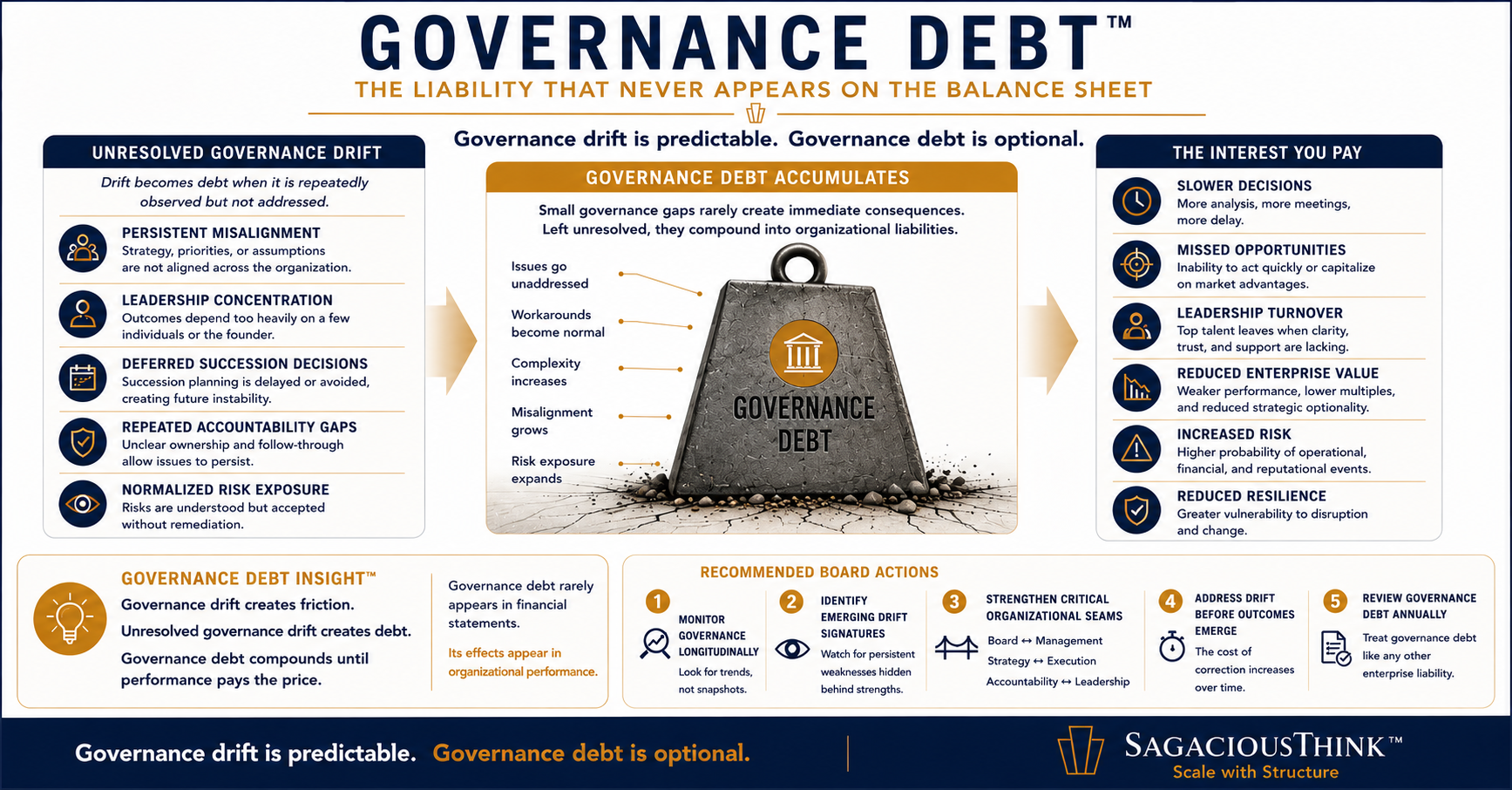
The strongest boards don't wait for red flags. They look for early signs of governance drift before drift becomes governance debt and debt becomes consequence.
Because organizations rarely break all at once. They drift there first.
Most companies do not realize they have a governance problem until growth starts creating friction.
Decisions slow down.
Coordination weakens.
Risks surface too late.
Leadership becomes the bottleneck.
At a certain point, every organization reaches a complexity threshold where informal leadership systems stop scaling effectively.
The companies that navigate this successfully understand something important:
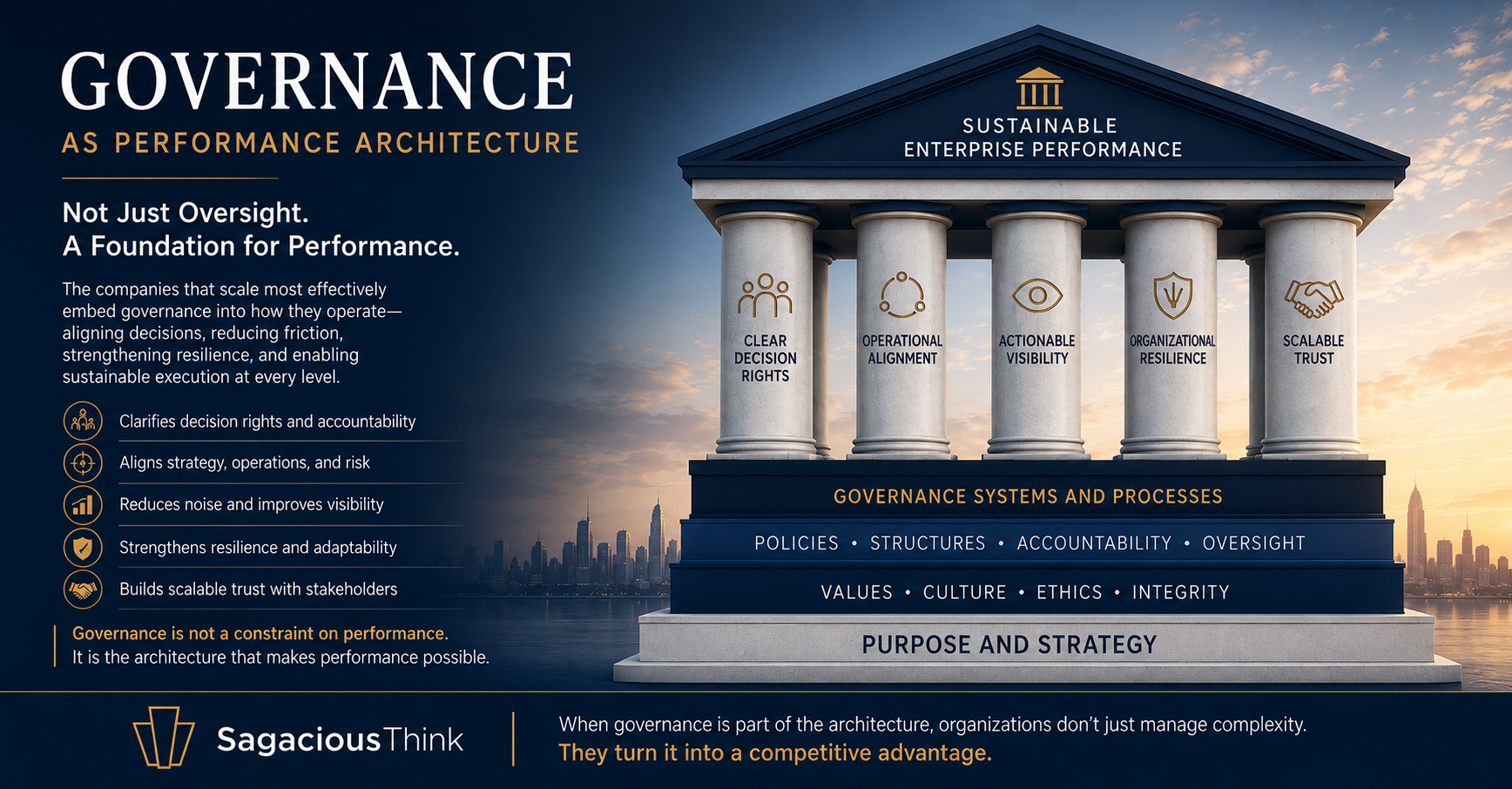
Governance is not bureaucracy layered onto performance.
It is part of the architecture that makes performance possible.
In this article, I explore:
• why governance failures are often actually execution failures,
• how structural friction quietly undermines scaling companies,
• why governance maturity increasingly shapes operational performance,
• and how organizations can build governance into the architecture of execution itself.
Including:
a real-world scaling case study,
leadership and board discussion questions,
and practical insights for organizations navigating increasing complexity.
Corporate governance is undergoing a structural shift driven by three forces: AI oversight, geopolitical influence on governance frameworks, and evolving expectations around transparency and board composition. Across the United States, Europe, Asia, Africa, and the Middle East, regulators, investors, and institutions are redefining what effective governance means in an environment where technological risk, geopolitical influence, and stakeholder trust increasingly intersect.
The result is a transition from governance focused primarily on financial oversight and compliance toward governance that must now incorporate technology oversight, geopolitical awareness, and broader stakeholder transparency. Boards that fail to adapt risk not only regulatory exposure but also strategic blind spots as technology and regulatory environments evolve faster than traditional governance frameworks.
Read MoreAI governance reimagined as Maslow’s Hierarchy of Needs
Read More