Acquirers scrutinize a target’s earnings, customers, leadership, technology, and liabilities. While often treating their own organization, the one intended to absorb the acquisition, as a fixed variable. Before asking what the target will require after close, leadership and the board should examine whether the buyer has the capacity, decision structure, leadership depth, and resilience to deliver the deal thesis.
Read MoreThe target can be attractive, the price defensible, and the deal thesis sound—and the acquisition can still outrun the buyer’s organizational capacity. Leadership bandwidth, decision rights, governance, and the ability to protect the existing business all influence whether value is realized after close. This article examines why experienced acquirers develop an advantage, what first-time and infrequent buyers may not yet have built, and how organizational evidence can reveal what a transaction will demand before the integration pressure arrives.
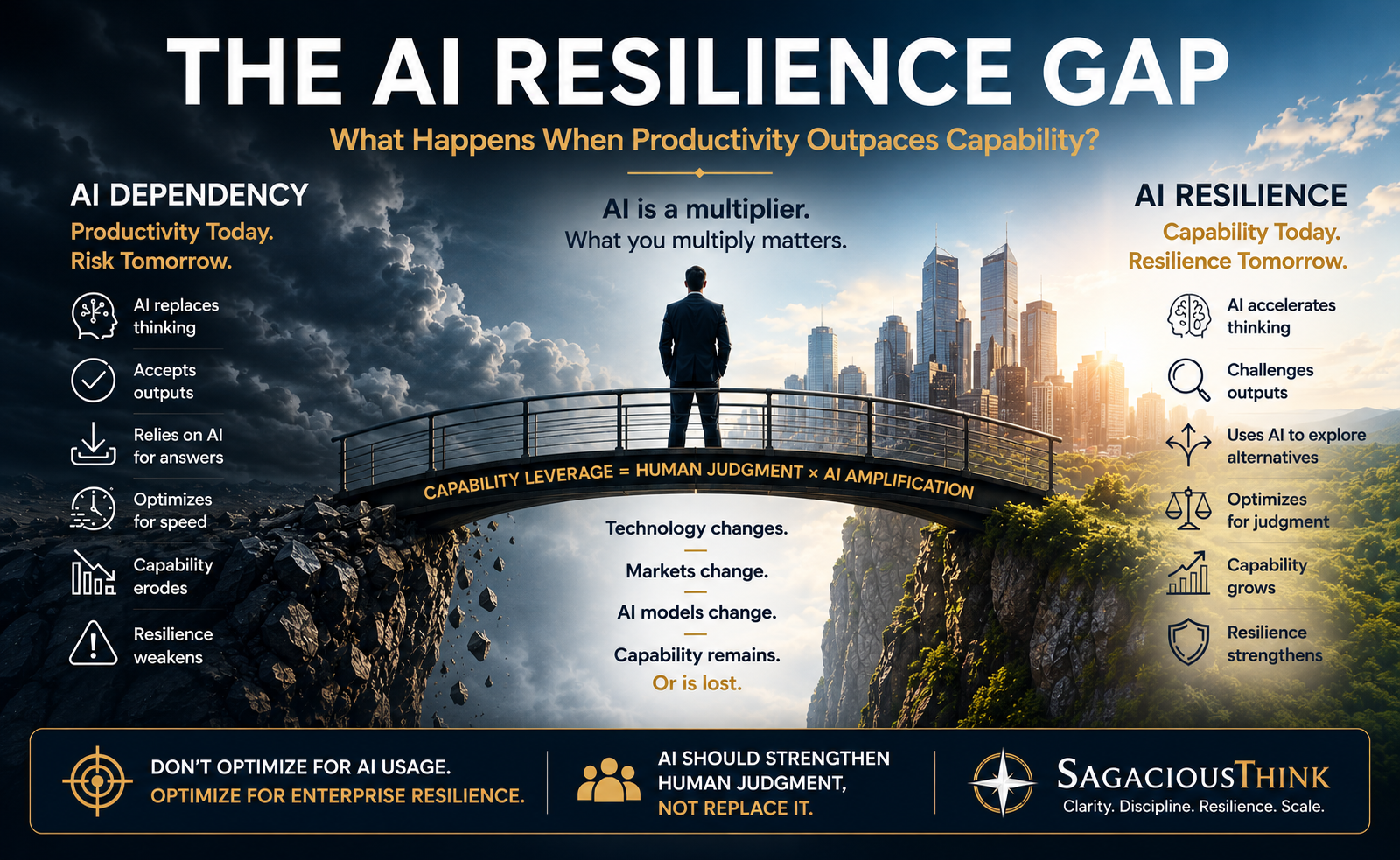
Read MoreMost organizations are asking: "How quickly are we adopting AI?"
Few are asking: "What capabilities are we losing in the process?"
As companies race to increase AI usage, a critical question is emerging:
Are we building more capable organizations, or more dependent ones?
In this article, I explore the growing AI Resilience Gap: what happens when productivity gains outpace capability development, why incentive structures matter, and how leaders can ensure AI strengthens judgment, institutional knowledge, and enterprise resilience rather than quietly eroding them.
The goal should be sustainable performance under increasing complexity, not AI adoption.
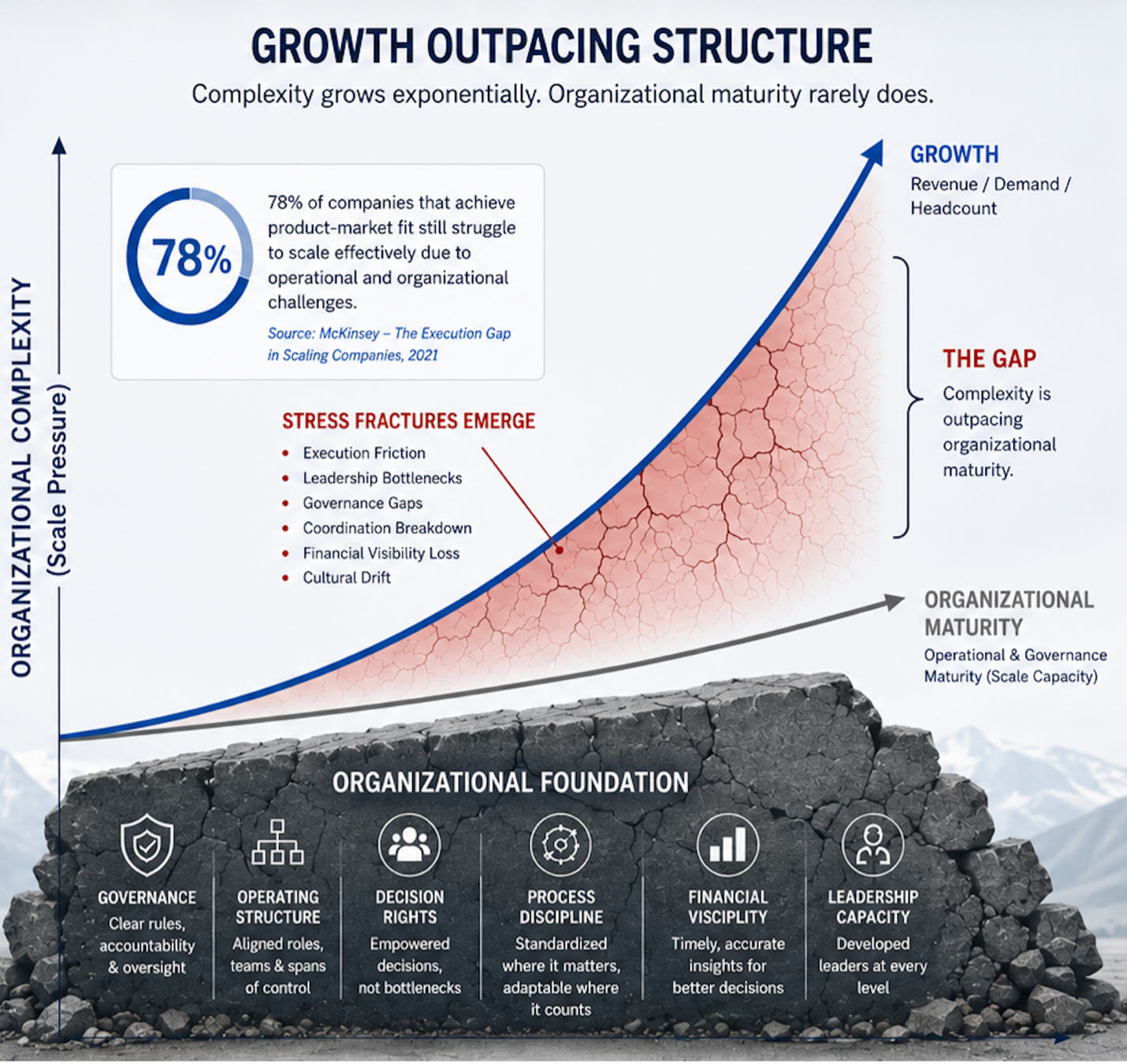
Read MoreGrowth does not simply create more work. It changes the operating conditions of the organization itself.
As middle market companies scale, complexity expands across operations, governance, risk oversight, decision-making, cross-functional coordination, cybersecurity, AI adoption, regulatory exposure, and leadership accountability. Yet many organizations continue operating with structures designed for a much smaller business.
The result is often not immediate failure, but growing organizational strain: slower decisions, leadership bottlenecks, execution friction, governance gaps, declining operational visibility, and hidden enterprise risk that boards and leadership teams may not fully see until performance begins to suffer.
This article explores why scaling challenges frequently emerge not because growth opportunities are weak, but because organizational maturity, governance discipline, and operational structure are not evolving at the same pace as organizational complexity.
Read MoreStop the 'hero culture' bottleneck. Learn why SME productivity fails during growth and how process discipline transforms startups and family businesses into scalable, high-value assets. Expert insights from LouAnn Conner.
Read More