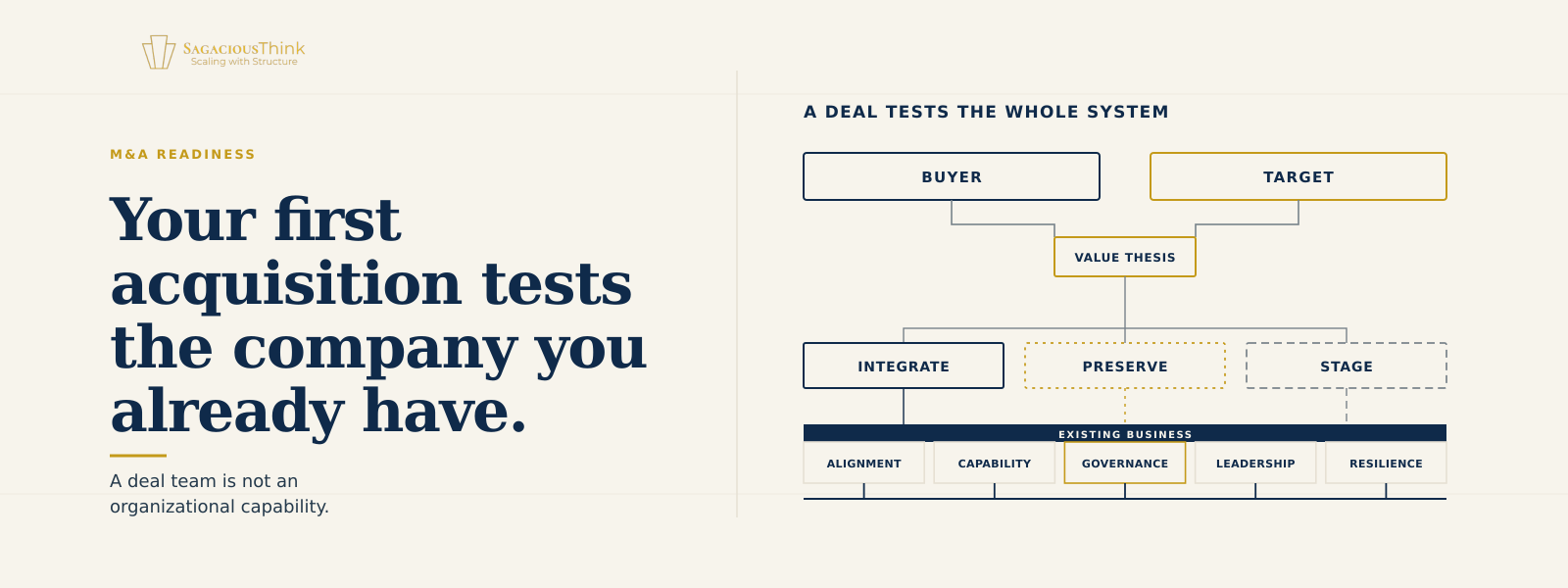
The first acquisition is often treated as a test of the deal thesis. It is also a test of the company making the deal. Can leaders keep the base business strong while absorbing a new one? Can the organization decide what to integrate, preserve, or stage—and recognize when its assumptions are wrong? For a first-time acquirer, the answers shape not only this transaction, but whether the company is better prepared for the next one.
Read MoreA board and CEO can agree on where the company stands today and still be working from very different assumptions about what could change tomorrow. Quantum provides a useful test. By independently considering the company's current position, the evidence behind it, the triggers that could change it, and the response that would follow, boards and management can uncover differences that ordinary consensus may hide. The question isn't whether everyone sees quantum the same way. It's whether they understand enough of the same map to recognize when the company's answer needs to change.

Read MoreQuantum readiness does not require a quantum strategy. For most middle-market companies, the more useful question is whether the organization can recognize when quantum becomes relevant to its security, customers, vendors, or business model—and respond before urgency takes over. The Quantum Relevance Map offers a practical starting point: understand where you are today, identify what could cause that position to change, and build the organizational capacity to notice when it does.
Read MoreAcquirers scrutinize a target’s earnings, customers, leadership, technology, and liabilities. While often treating their own organization, the one intended to absorb the acquisition, as a fixed variable. Before asking what the target will require after close, leadership and the board should examine whether the buyer has the capacity, decision structure, leadership depth, and resilience to deliver the deal thesis.
Read More