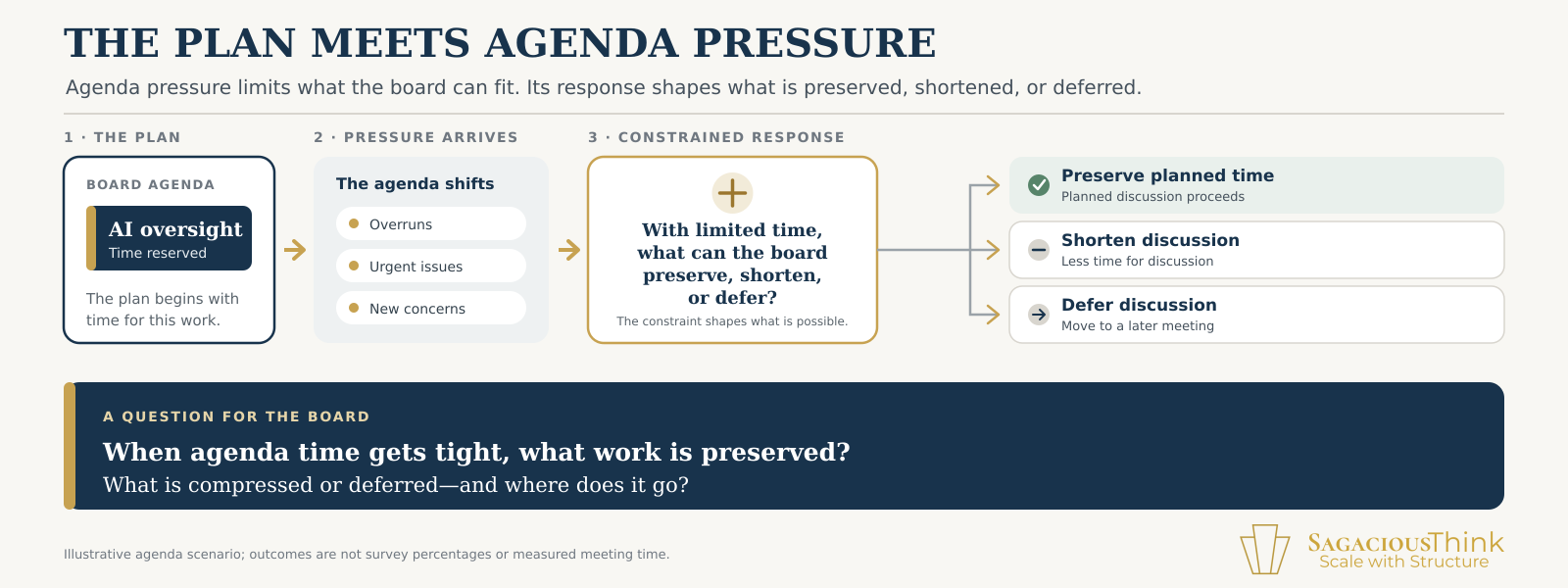
Boards may reserve time for AI oversight and still struggle to give the subject sustained attention. Agenda pressure forces trade-offs, and management’s expertise helps only when it reaches directors as information they can examine and use. Drawing on recent board surveys, this article looks at how time, information, and director judgment shape AI oversight—and what boards can ask when discussion is shortened or deferred.
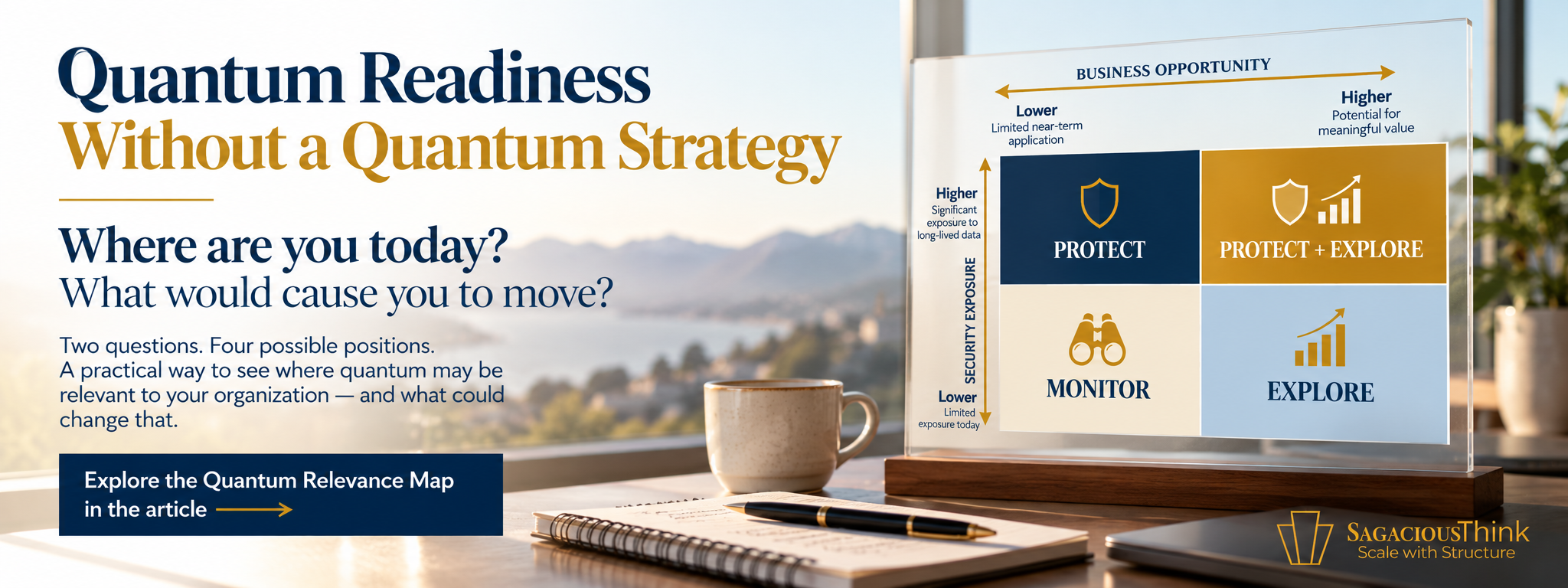
Read MoreQuantum readiness does not require a quantum strategy. For most middle-market companies, the more useful question is whether the organization can recognize when quantum becomes relevant to its security, customers, vendors, or business model—and respond before urgency takes over. The Quantum Relevance Map offers a practical starting point: understand where you are today, identify what could cause that position to change, and build the organizational capacity to notice when it does.
Read MoreAI risk may already be on your board’s agenda. But can directors see where it is actually entering the business—through vendor software, employee use, consequential decisions, or even the analysis reaching the board itself? This article uses an illustrative BoardPulse assessment to show how an adequate overall result can conceal a load-bearing weakness, where CEOs and directors may be working from different pictures, and how the findings can be translated into practical next steps before adoption outpaces oversight.
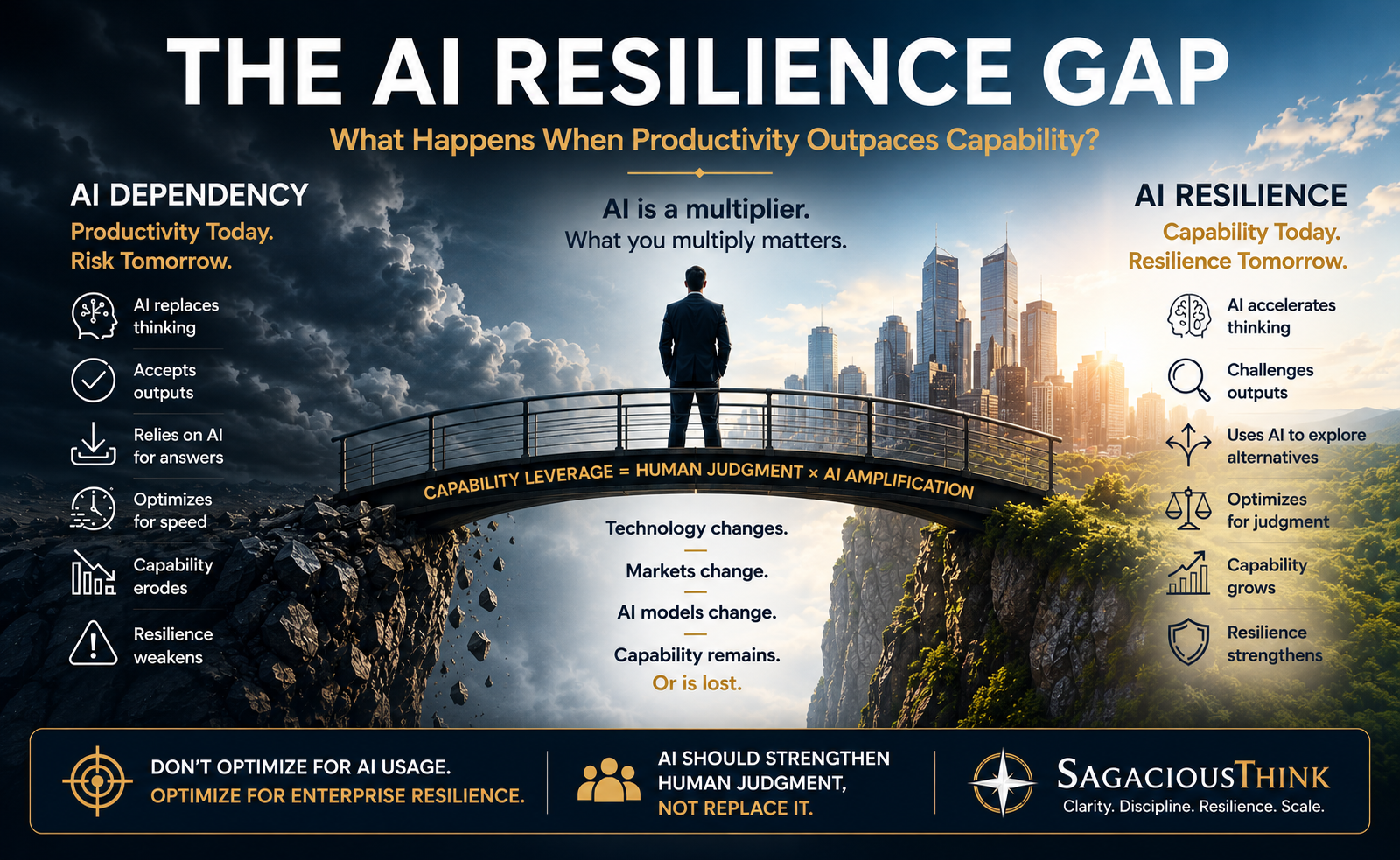
Read MoreMost organizations are asking: "How quickly are we adopting AI?"
Few are asking: "What capabilities are we losing in the process?"
As companies race to increase AI usage, a critical question is emerging:
Are we building more capable organizations, or more dependent ones?
In this article, I explore the growing AI Resilience Gap: what happens when productivity gains outpace capability development, why incentive structures matter, and how leaders can ensure AI strengthens judgment, institutional knowledge, and enterprise resilience rather than quietly eroding them.
The goal should be sustainable performance under increasing complexity, not AI adoption.
Read MoreMost board directors still treat cybersecurity as something they oversee: a dashboard, a quarterly report, a briefing from the CISO. That framing is now incomplete.
Directors are not just governing cyber risk. They are increasingly part of the attack surface itself, in an environment where AI has dramatically lowered the cost, speed, and precision of attacks, the gap between what directors assume about their own exposure and what adversaries already understand is rapidly widening.
Read More