The target can be attractive, the price defensible, and the deal thesis sound—and the acquisition can still outrun the buyer’s organizational capacity. Leadership bandwidth, decision rights, governance, and the ability to protect the existing business all influence whether value is realized after close. This article examines why experienced acquirers develop an advantage, what first-time and infrequent buyers may not yet have built, and how organizational evidence can reveal what a transaction will demand before the integration pressure arrives.
Read MoreWhen chief executives need to make sense of what lies ahead, many turn to other CEOs more readily than to their own directors or chair. That does not necessarily indicate a failing board. It raises a more revealing question: if relevant experience is already present around the board table, why does the CEO seek it elsewhere? The answer may lie less in what directors know than in trust, timing and whether their knowledge can enter the conversation before a strategic direction has hardened.
Read MoreMcKinsey’s research makes a compelling case that CEO performance is a significant driver of private equity returns, a value it calls “CEO alpha.” But strong CEO performance raises a second question for PE partners and portfolio company leaders: is the CEO building capabilities the company itself owns, or do results still disproportionately depend on that leader’s judgment, attention, and intervention? Beyond CEO Alpha explores the difference between value created by an exceptional leader and organizational capability that can endure through accelerated growth, an add-on acquisition, a leadership transition, or exit.
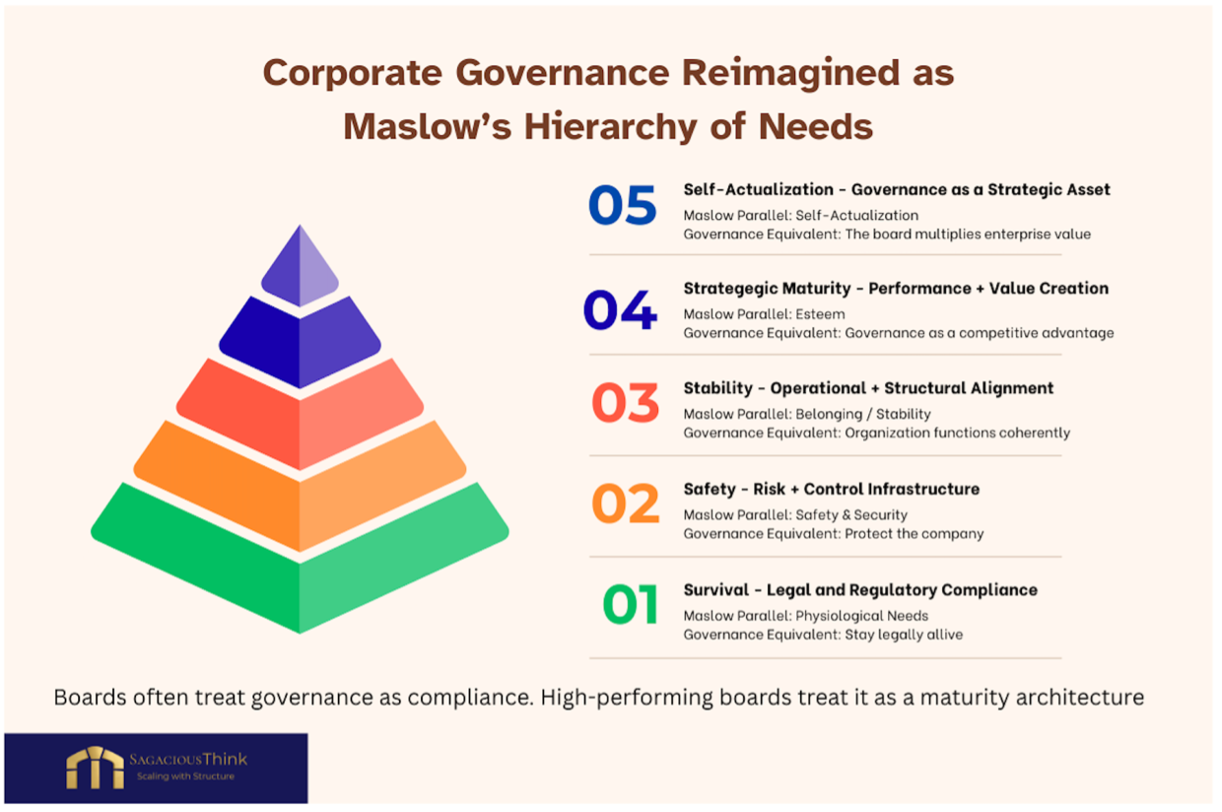
Read MoreWe talk about leadership maturity. Operational maturity. Cultural maturity. We rarely talk about governance maturity. But your board has a hierarchy of needs just like everything else — and most are stuck somewhere between survival and safety, calling it strategy.
Read More